
Short answer
Paint lasts longer and blocks more sun and water. A stain shows more of the wood and is usually easier to refinish, but it needs more frequent upkeep. USDA Forest Products Laboratory tests over 14 years found that paints outlasted solid-color stains, which outlasted semitransparent stains and clear finishes. In a wet climate like the Willamette Valley, the right choice depends on the look you want and how often you want the work redone.
Key takeaways
- Paint is a film that hides the grain and, with a primer, gives the longest service life of the common wood finishes.
- Solid-color stains also form a film. They look like thin paints and, in laboratory tests, did not last as long as a primer-and-paint system.
- Semitransparent oil stains penetrate the wood, show the grain, and do not peel the way a film can, but they wear away sooner and need more frequent recoating.
- Clear finishes and unpigmented preservatives ranked last in the same 14-year tests.
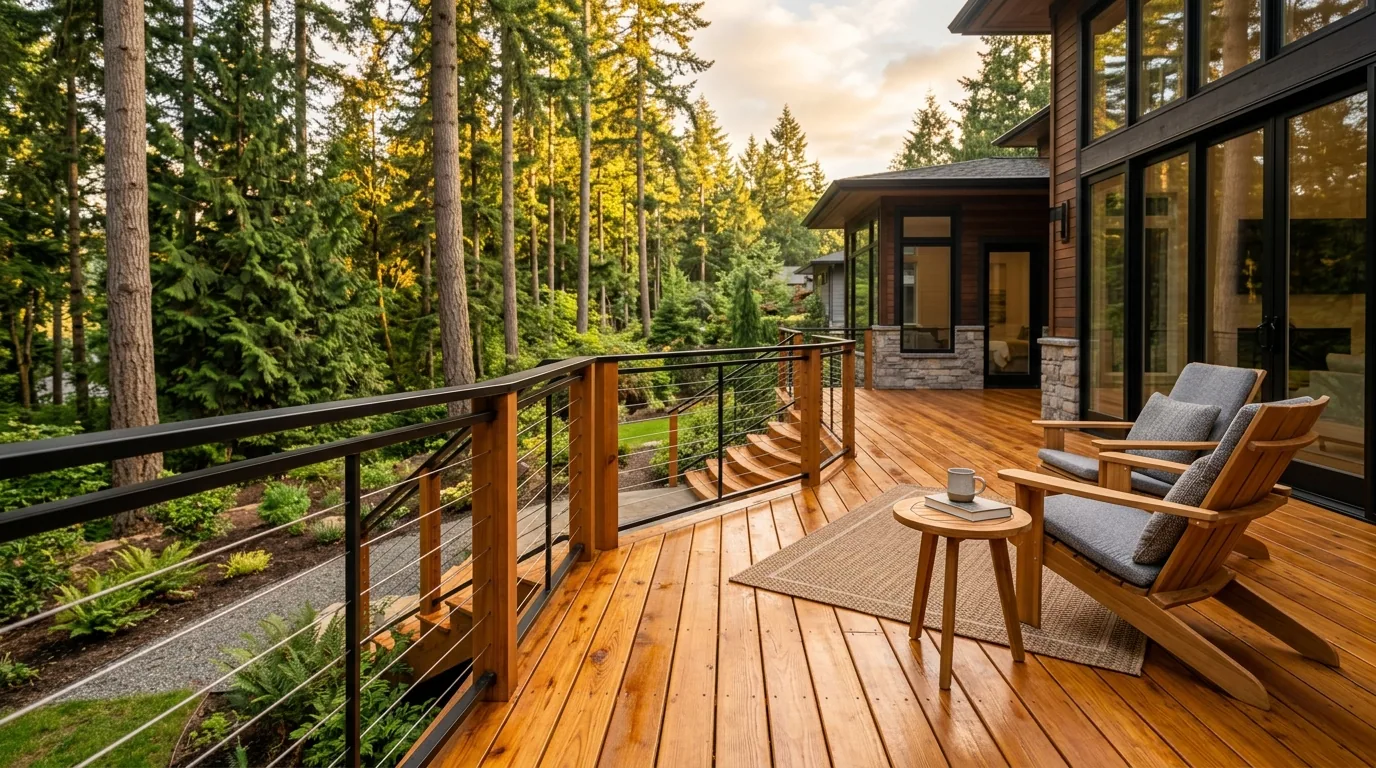
- Decks, fences and some barns are often better candidates for stain. House siding that you want to paint less often is usually a better candidate for paint.
What is the difference between paint and stain?
Paint sits on the surface as a film. It hides the grain, blocks sunlight, and sheds water. The Forest Products Laboratory's FinishLine on choosing a finish notes that a good acrylic latex house paint generally outlasts a good oil-based house paint, in part because acrylic films stay more flexible and are more resistant to sunlight.
Stains come in two main types. A solid-color stain is a thin film. It hides most of the grain and behaves like a paint, including the risk of peeling if moisture gets underneath. A true semitransparent stain, usually oil-based, soaks into the wood. It leaves the grain visible, and because it does not form a skin, it is not prone to blistering or peeling the way a film is. It also wears away sooner, especially on surfaces that see sun and rain.
| Finish | Look | How it holds up | Refinishing |
|---|---|---|---|
| Primer plus paint | Hides the grain; solid color | Longest service life in the 14-year tests | Prep and repaint before the film fails down to wood |
| Solid-color stain | Almost hides the grain; thin film | Lasts longer than penetrating stains, shorter than paint | May need more frequent recoats; can peel like paint |
| Semitransparent stain | Shows the grain | Wears away rather than peels; shorter life than paint | Recoat more often, usually with less film stripping |
| Clear or lightly pigmented preservative | Most of the wood stays visible | Shortest service life in the same tests | Frequent upkeep, especially in sun and rain |
Which one lasts longer in a wet climate?
Paint, when it is applied as a system over a primer, on wood that is sound and dry. That is the consistent finding in Forest Products Laboratory work, including the 14-year cedar-siding study and later comparisons of primer-and-paint systems against solid-color stain. Oregon weather does not reverse that ranking. It does make moisture control more important. Paint that traps water, or stain applied to wet or already failing wood, will not get the service life the tests describe.
The Willamette Valley's long wet season is hard on any finish. Rain drives water into joints and end grain. Shade slows drying. Sun on the south and west sides breaks down pigments and binders. A penetrating stain can be more forgiving on a surface that will get wet, because it will not peel in a sheet. It will, however, need to be renewed sooner. Paint wins if the goal is the longest interval between jobs, and if the siding can be prepped and kept dry enough for a film to bond.
When is a stain the better choice?
When you want the wood grain to stay visible, or when the surface is a poor candidate for a film. Decks, fences, some barns and outbuildings, and rough-sawn wood are common stain jobs. The Forest Products Laboratory notes that solid-color stains can be preferable to paint when the wood will be refinished often, and that oil-based semitransparent stains are the penetrating option that actually soaks in. A latex 'semitransparent' product that forms a film will not behave like a true penetrating stain.
Stain is also a better conversation when the existing finish is already a stain, or when the siding has been left bare and you want to keep a wood look. Switching a peeling painted house to stain is not a shortcut. The failing film still has to be dealt with first, or the new finish has nothing sound to hold on to.
What does a painter check before recommending one?
The species and condition of the wood, the current finish, how much sun and shade each side gets, and the look you want. The inspection should also find soft or rotted wood, open joints, and moisture problems. Those have to be repaired for either finish to last. On cedar and redwood, extractives can bleed through latex paint unless a stain-blocking primer is part of the system, which is another reason a primer-and-paint job is specified as a system, not as a single can.
If you are choosing for house siding that you want to leave alone for as many years as possible, paint is usually the recommendation. If you are choosing for a deck, a fence, or a building where the wood look is the point, stain is usually the recommendation. A walk-through of the actual surface is what settles it.
Frequently asked questions
Does paint last longer than stain on wood siding?
Yes, in Forest Products Laboratory exposure tests. A primer-and-paint system outlasted solid-color stains, which outlasted semitransparent stains and clear finishes, over 14 years of outdoor exposure.
Will stain peel in Oregon rain?
A penetrating semitransparent stain generally wears away instead of peeling. A solid-color stain forms a film, so it can peel if moisture gets underneath, the same way paint can.
Can you stain a house that is already painted?
Not as a simple switch. The old paint film has to be removed or the new stain cannot reach the wood, and any remaining film can keep the stain from soaking in. A painter should look at the surface before anyone assumes stain is an option.
Is stain better for a deck than paint?
Often, yes. Decks take traffic, standing water and direct sun. A penetrating stain can be recoated without fighting a peeling film. Paint on a horizontal walking surface is more likely to fail early.
Do barns and outbuildings need the same finish as a house?
Not always. A barn or shop may be a better stain or solid-color stain candidate if the look is rustic or the owner expects more frequent upkeep. A house where you want the longest interval between jobs is usually a paint candidate.
Sources
- Knaebe, M. (USDA Forest Products Laboratory), Paint, Stain, Varnish, or Preservative? It's Your Choice, FinishLine, 2013
- Williams, R.S. and Feist, W.C. (USDA Forest Products Laboratory), Service life of finishes on smooth-planed and saw-textured western redcedar bevel siding, JCT Coatings Tech, 2007
- NOAA National Centers for Environmental Information, U.S. Climate Normals 1991–2020, Salem McNary Field (USW00024232)
- Cassens, D.L. (Purdue University) and Feist, W.C. (USDA Forest Products Laboratory), Discoloration of House Paint: Causes and Cures, NCR-134